

Introduction
Productivity tools are no longer limited to offices or large companies. Today, they are used by students, freelancers, small business owners, and even homemakers who want better control over their time. In a world full of distractions, staying focused has become a daily challenge. This is where productivity tools play an important role in simplifying work and reducing stress.
Productivity tools help people plan tasks, manage time, organize ideas, and track progress without feeling overwhelmed. Instead of remembering everything in your head, these tools allow you to work smarter and stay consistent. As a result, you complete more work in less time and with better quality.
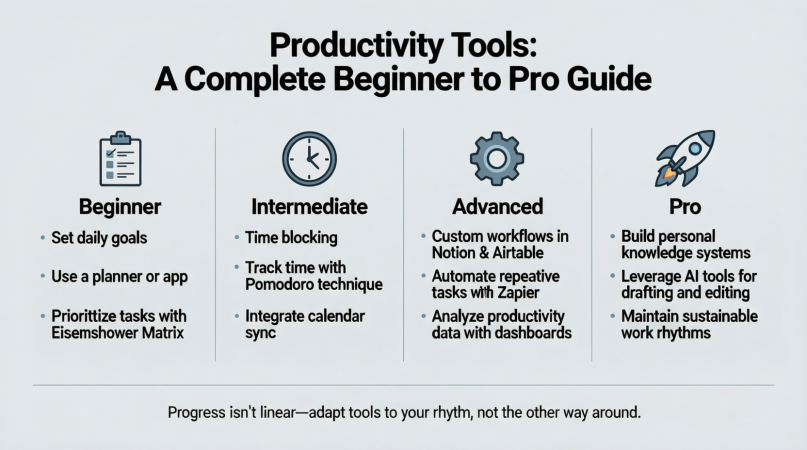
For beginners, productivity tools create structure and discipline. For intermediate users, they bring automation and efficiency. No matter your skill level, these tools can transform the way you work and think. They also reduce mental fatigue by breaking large goals into small, achievable steps.
This guide is designed to help you understand productivity tools in simple language. You will learn what they are, why they matter, how to use them step by step, and how to avoid common mistakes. By the end, you will know how to choose the right tools and use them effectively for long term success.
What is Productivity Tools?
Productivity tools are software, apps, or systems designed to help individuals and teams complete tasks more efficiently. They focus on saving time, improving organization, and increasing output without adding unnecessary pressure.
These tools can be digital or physical, but most modern productivity tools are digital. Examples include task managers, calendar planners, note taking apps, time trackers, and collaboration platforms.
At their core, productivity tools help you do three things better. First, they help you plan what needs to be done. Second, they help you focus on the right tasks at the right time. Third, they help you review your progress and improve your workflow.
Productivity tools are not about working longer hours. Instead, they are about working with clarity and intention. When used correctly, they remove confusion and help you stay aligned with your goals.
Why is Productivity Tools Important?
Productivity tools are important because they create balance between work and life. Without proper systems, people often feel busy but achieve very little.
One major reason productivity tools matter is time management. They help you see where your time goes and how to use it wisely. This awareness alone can improve daily performance.
Another reason is focus. Productivity tools reduce distractions by organizing tasks and setting priorities. When your tasks are clear, your mind stays calm.
They also support consistency. Small daily actions, when tracked and repeated, lead to big results over time. Productivity tools make this process visible and motivating.
Finally, productivity tools improve accountability. When tasks are written and scheduled, they are more likely to be completed. This builds confidence and discipline in both personal and professional life.
Detailed Step-by-Step Guide
Step 1: Identify Your Goals
Start by understanding what you want to achieve. Goals can be daily, weekly, or long term.
Write down your goals clearly. For example, instead of saying work more, say complete three important tasks daily.
Clear goals make productivity tools more effective.
Step 2: Choose the Right Type of Tool
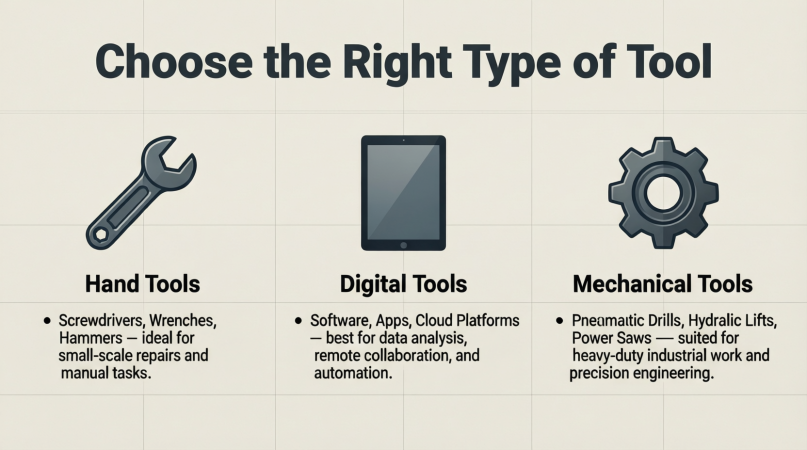
Different goals need different productivity tools.
For task management, use to do lists or planners.
For time control, use time tracking tools.
For ideas, use note taking systems.
Avoid using too many tools at once.
Step 3: Set Up Your Tool Properly
Spend time setting up categories, folders, or labels.
Organize tasks by priority and deadlines.
Create simple naming systems.
Keep the layout clean and easy to use.
A good setup saves time later.
Step 4: Create a Daily Workflow
Decide how you will use your productivity tools every day.
Start the day by reviewing tasks.
Work in focused time blocks.
End the day by checking progress.
Consistency is more important than perfection.
Step 5: Track and Review Progress
Regular reviews help you understand what works and what does not.
Weekly reviews are ideal.
Remove tasks that no longer matter.
Adjust priorities as needed.
This step improves long term productivity.
Step 6: Improve and Simplify
Over time, simplify your system.
Remove unused features.
Combine similar tasks.
Focus on what truly adds value.
Productivity tools should support you, not control you.
Benefits of Productivity Tools
- Better time management and planning
- Improved focus and reduced distractions
- Clear task organization and priorities
- Increased consistency and discipline
- Lower stress and mental overload
- Higher quality output with less effort
- Easy tracking of progress and goals
- Better work life balance
Disadvantages / Risks
- Overdependence on tools instead of thinking
- Time wasted on setting up complex systems
- Distraction from too many notifications
- Using too many tools at once
- Loss of flexibility in rigid schedules
- Data privacy concerns in digital tools
Common Mistakes to Avoid
Many people fail to benefit from productivity tools because of simple mistakes.
One common mistake is tool hopping. Constantly switching tools prevents habit building.
Another mistake is overplanning. Spending more time planning than doing actual work reduces productivity.
Ignoring reviews is also harmful. Without reviews, mistakes repeat.
Some users set unrealistic expectations. Productivity tools support effort, they do not replace it.
Finally, copying others blindly can fail. Every workflow should match personal needs.
FAQs
What are the best productivity tools for beginners?
Beginners should start with simple task managers and basic calendars. Tools that are easy to understand and quick to use work best. Simplicity helps build habits without stress.
Can productivity tools really save time?
Yes, productivity tools save time by reducing decision making and confusion. When tasks are planned, you spend less time thinking about what to do next.
How many productivity tools should I use?
Using one or two productivity tools is usually enough. Too many tools create complexity and reduce focus. Master one tool before adding another.
Are productivity tools useful for personal life?
Productivity tools are very useful for personal tasks like fitness, budgeting, learning, and household planning. They bring structure to daily life.
Do productivity tools work for creative people?
Creative people benefit greatly from productivity tools when they use flexible systems. Tools help manage deadlines while leaving space for creativity.
How long does it take to see results?
Most people notice improvements within two to three weeks. Consistent use is the key factor. Small daily improvements lead to visible results.
Expert Tips & Bonus Points
Start small and build slowly.
Use weekly reviews to stay aligned.
Turn off unnecessary notifications.
Focus on outcomes, not busy work.
Customize tools to match your thinking style.
Keep systems simple and flexible.
Use productivity tools as support, not pressure.
Experts recommend treating productivity as a skill, not a goal. Tools are helpful, but mindset matters most.
Conclusion
Productivity tools have become essential in modern life. They help people manage time, reduce stress, and achieve goals with clarity. When used correctly, these tools create structure without limiting creativity. They allow you to focus on meaningful work instead of reacting to constant distractions.
For beginners, productivity tools provide guidance and direction. For intermediate users, they unlock efficiency and consistency. The key is choosing the right tools and using them with purpose. Simple systems often work better than complex setups.
Remember that productivity tools are not magic solutions. They work best when combined with discipline, realistic goals, and regular reviews. Avoid common mistakes like overplanning or using too many tools at once.
By applying the steps, tips, and strategies shared in this guide, you can build a sustainable productivity system. Over time, small improvements will lead to big results. Productivity tools, when used wisely, can truly transform how you work and live.
