

Introduction
Artificial intelligence is no longer a complex idea limited to science fiction movies or research labs. Today, artificial intelligence is part of everyday life, quietly working behind the scenes to make tasks easier, faster, and smarter. From mobile phones and online shopping to healthcare and education, this technology is shaping how people live and work. Because of this growing presence, many beginners want to understand what artificial intelligence really means and why it matters so much.
In simple words, artificial intelligence focuses on building machines that can think, learn, and make decisions like humans. However, it does not mean machines replacing people completely. Instead, artificial intelligence works as a powerful assistant that helps humans perform tasks better. For beginners and intermediate learners, understanding the basics can open doors to new skills, career options, and smarter use of technology.
Moreover, artificial intelligence is evolving rapidly. New tools and systems appear almost every year, changing industries and creating new opportunities. Therefore, learning about artificial intelligence today helps you stay prepared for tomorrow. This article explains artificial intelligence in clear and simple language. It covers its meaning, importance, step by step working, benefits, risks, common mistakes, and expert tips. By the end, you will have a complete understanding without feeling overwhelmed or confused.
What is Artificial Intelligence?
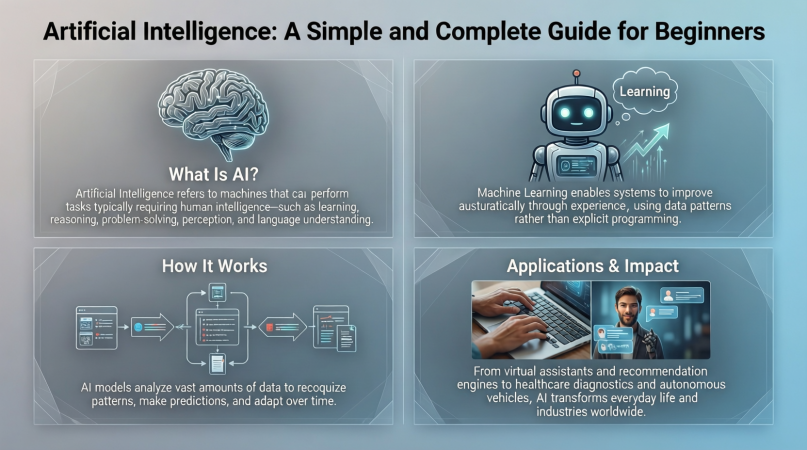
Artificial intelligence is a branch of computer science that focuses on creating machines capable of performing tasks that normally require human intelligence. These tasks include learning from data, understanding language, recognizing images, solving problems, and making decisions.
Instead of following only fixed instructions, artificial intelligence systems can improve their performance over time. They learn patterns from data and use those patterns to make predictions or decisions. For example, when a music app suggests songs you might like, it is using artificial intelligence to understand your preferences.
Artificial intelligence can be divided into different types. Narrow artificial intelligence is designed for one specific task, such as voice assistants or recommendation systems. General artificial intelligence, which can think and learn like a human across many tasks, is still under development. Most tools used today fall under narrow artificial intelligence.
Why is Artificial Intelligence Important?
Artificial intelligence is important because it helps solve complex problems efficiently and accurately. It reduces human effort, saves time, and improves productivity across many fields. Businesses use artificial intelligence to analyze data and make better decisions. Doctors use it to detect diseases early. Students use it to learn faster and smarter.
Another reason artificial intelligence matters is scalability. A single system can serve millions of users at the same time without getting tired. This makes services faster and more accessible. Additionally, artificial intelligence improves safety by handling risky tasks such as monitoring hazardous environments or detecting fraud.
Most importantly, artificial intelligence drives innovation. It encourages new ideas, products, and services that were not possible before. As technology grows, artificial intelligence continues to shape the future of work, education, and daily life.
Detailed Step-by-Step Guide
Step 1: Data Collection
Artificial intelligence begins with data. Data can include text, images, videos, numbers, or sounds. The quality and quantity of data directly affect how well a system performs. For example, a language tool needs large amounts of written text to understand grammar and meaning.
Step 2: Data Preparation
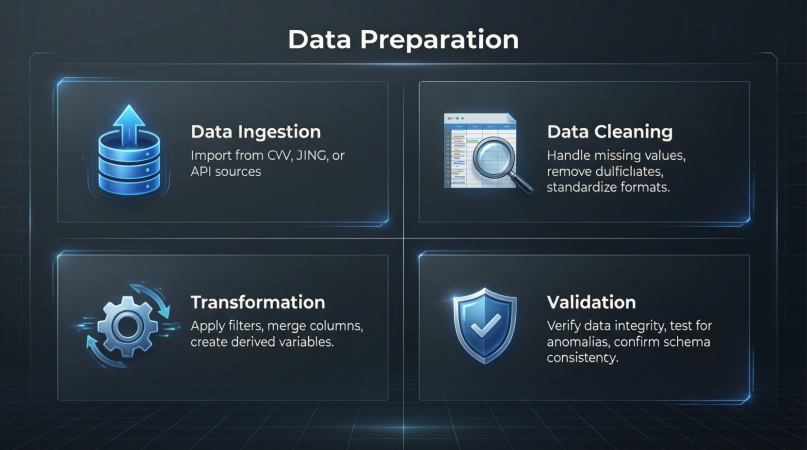
After collecting data, it must be cleaned and organized. This step removes errors, duplicates, and irrelevant information. Clean data helps artificial intelligence systems learn accurately and avoid confusion.
Step 3: Choosing an Algorithm
An algorithm is a set of rules that guides how artificial intelligence learns from data. Different tasks require different algorithms. For example, image recognition uses different methods than language translation.
Step 4: Training the Model
Training involves feeding data into the algorithm so it can learn patterns. During this stage, the system makes predictions and corrects mistakes. Over time, it improves its accuracy and understanding.
Step 5: Testing and Evaluation
Once trained, the system is tested using new data. This step checks how well it performs in real situations. If results are not satisfactory, adjustments are made.
Step 6: Deployment and Improvement
After successful testing, the artificial intelligence system is deployed for real use. However, learning does not stop here. Continuous updates and new data help improve performance over time.
Benefits of Artificial Intelligence
- Improves efficiency by automating repetitive tasks
- Enhances decision making through data analysis
- Reduces human error in critical processes
- Saves time and operational costs
- Provides personalized user experiences
- Supports innovation and new solutions
Disadvantages / Risks
- High development and maintenance costs
- Risk of data privacy and security issues
- Possible job displacement in some sectors
- Dependence on quality data for accuracy
- Ethical concerns and bias in decision making
Common Mistakes to Avoid
Many beginners believe artificial intelligence works perfectly without human input. In reality, it requires careful planning, quality data, and regular monitoring. Another common mistake is expecting instant results. Artificial intelligence systems need time to learn and improve.
Ignoring ethical considerations is also a serious error. Bias in data can lead to unfair outcomes. Finally, some people try to apply artificial intelligence everywhere, even when simpler solutions work better. Understanding the right use cases is essential.
FAQs
What is artificial intelligence in simple terms?
Artificial intelligence means machines that can learn, think, and make decisions similar to humans. It helps computers perform tasks that usually require human intelligence.
Is artificial intelligence dangerous?
Artificial intelligence itself is not dangerous. Problems arise when it is used without proper rules, ethics, or security measures. Responsible use reduces risks.
Can beginners learn artificial intelligence?
Yes, beginners can learn artificial intelligence step by step. Starting with basic concepts and simple tools makes learning easier and more effective.
Where is artificial intelligence used today?
Artificial intelligence is used in smartphones, healthcare, finance, education, transportation, and many online services. It works silently in the background.
Does artificial intelligence replace jobs?
Artificial intelligence may change some jobs, but it also creates new opportunities. Many roles shift toward managing and improving intelligent systems.
How accurate is artificial intelligence?
Accuracy depends on data quality, algorithms, and testing. Well trained systems can be highly accurate, but continuous monitoring is necessary.
Expert Tips & Bonus Points
Start with clear goals before using artificial intelligence. Always focus on data quality, as good data leads to better results. Test systems regularly and update them with new information. Learn basic concepts before advanced topics. Most importantly, consider ethics and fairness while designing solutions.
Conclusion
Artificial intelligence is transforming the world in a steady and meaningful way. It is not a distant future concept but a present day reality that influences how people work, learn, and communicate. By understanding artificial intelligence in simple terms, beginners and intermediate learners can reduce fear and confusion around this technology.
Throughout this guide, we explored what artificial intelligence is, why it is important, and how it works step by step. We also discussed its benefits, risks, common mistakes, and expert tips to help you use it wisely. Artificial intelligence works best when humans guide it with clear goals, quality data, and ethical thinking.
As technology continues to grow, artificial intelligence will become even more integrated into daily life. Learning about it today prepares you for future opportunities and challenges. With the right knowledge and approach, artificial intelligence can be a powerful tool that supports progress, creativity, and smarter decision making for everyone.
